What you record
- Per process step: which batch or batches go in and which come out
- The process and quality data linked to that batch (settings, measured values, deviations)
- Enough detail to answer a recall question within minutes
Example (illustrative)
A complaint about finished-product batch X: back to the raw-material batch, the line, the shift and the process settings at that moment. And forwards: which other finished products shared the same raw-material batch, which is what sets the scope of any recall.
Demonstrability, not 'spotting problems sooner'
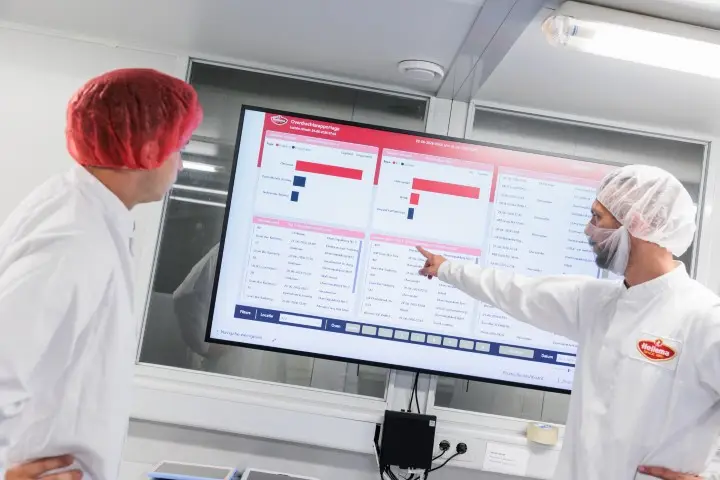
For BRCGS, IFS and FSSC 22000, traceability is not a feature but a survival kit: you have to be able to show a recall test and a mass balance. VDS links process and measurement data to the batch so that the cause can be traced back; the release-or-block decision stays with QA.
Frequently asked questions
What do BRCGS, IFS and FSSC require on traceability?
That you can track a batch in both directions, demonstrate a mass balance and carry out a recall test within an agreed time.
What is the difference between traceability and tracking?
Tracking follows where something is right now; traceability reconstructs the full origin and destination of a batch after the fact.
How quickly must a recall test be possible?
The standard and the customer set the deadline; the principle is that you must be able to show where a batch ended up without days of detective work.