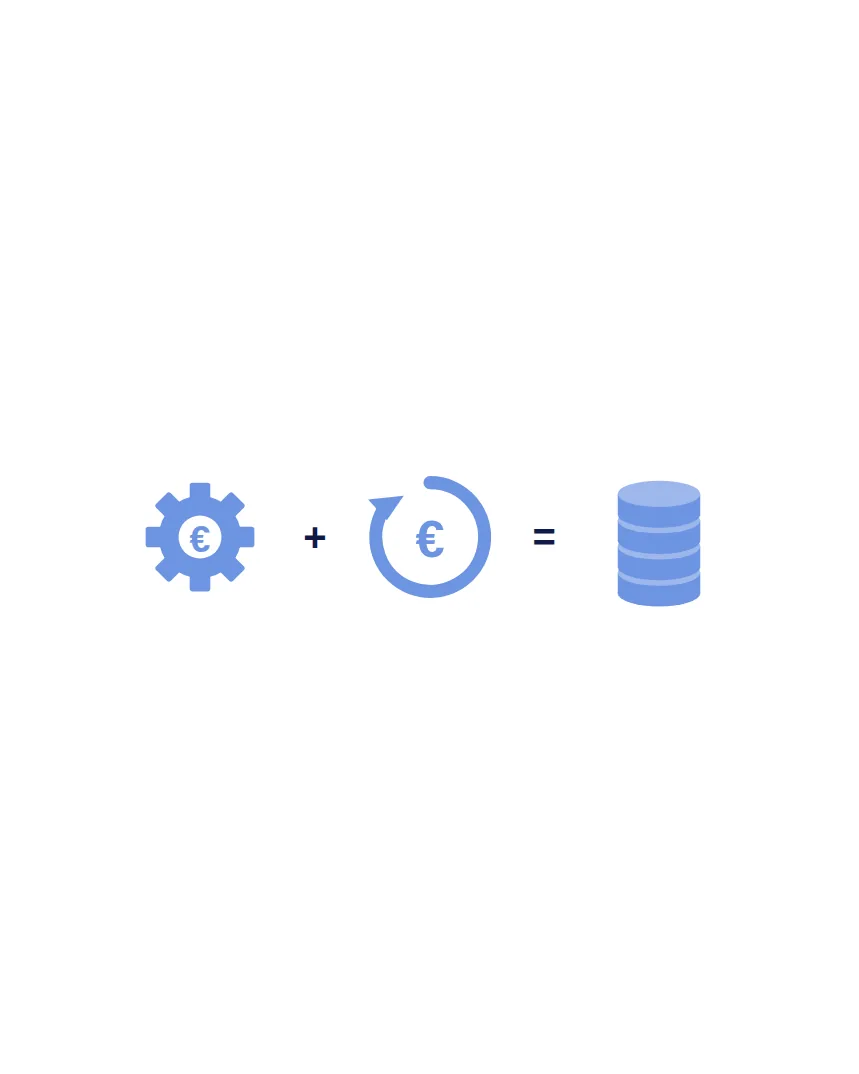
A production manager who wants more control talks about dashboards and real-time data. Management mainly hears costs. A good business case translates one into the other, on a single sheet of A4.
1. What the loss costs today
Start with the loss, not the solution. Take one line, split OEE into availability, performance and quality (see calculating OEE) and convert each loss into hours and then into euros.
A line with 4,000 planned hours and an OEE of 60% loses 1,600 hours a year. At €300 of contribution margin per hour, that is €480,000 in missed margin. That number gets attention.
2. What can realistically be recovered
Nobody recovers the full €480,000, and anyone who promises it loses the room. Pick a target you can point to: which downtime cause, which reject type, which changeover. Three OEE points on this line is 120 hours, or €36,000 a year.
3. What the solution costs
Most projects start between €10,000 and €50,000, a one-off set-up plus a monthly subscription. Add your own hours: someone from the maintenance department or IT, and an owner who uses the figures. What drives the price is set out in what does a smart factory project cost.
4. When it pays back
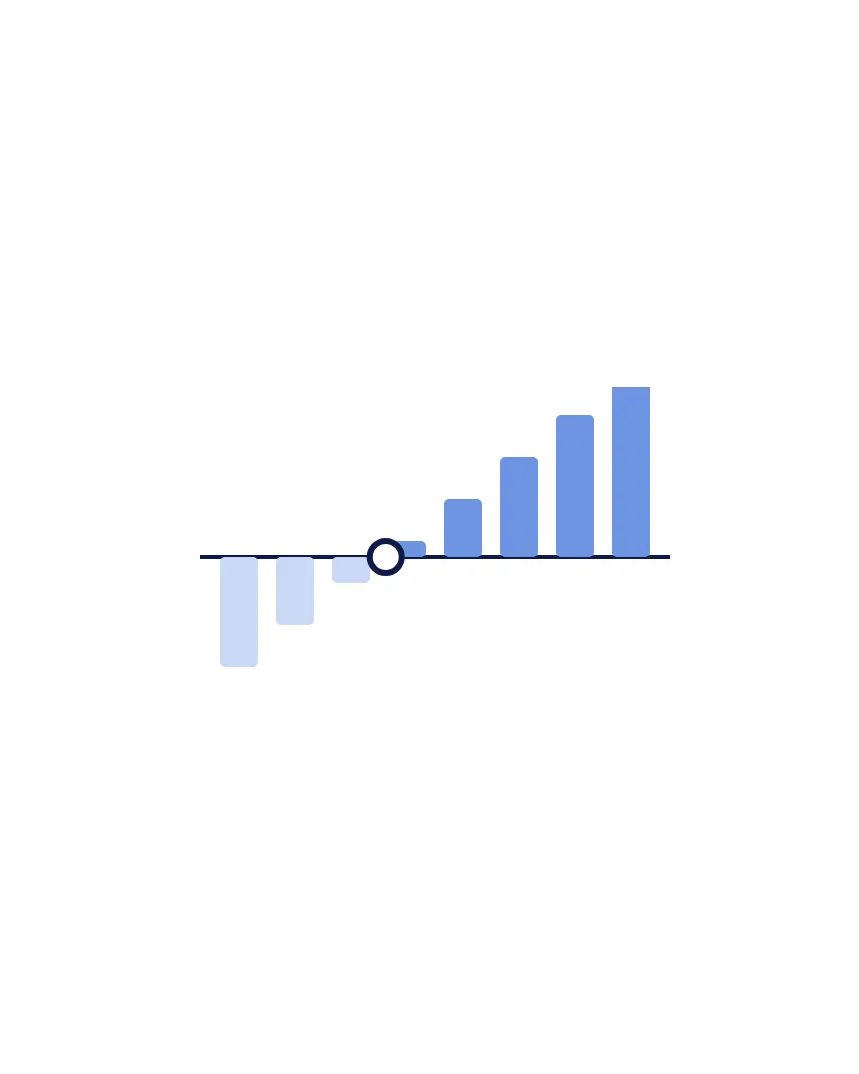
Payback period = one-off investment ÷ (annual saving − running costs). At €40,000 and €36,000 a year, that is just over 13 months before running costs. Also show what happens if it disappoints: at half the gain it is just over two years. Management trusts a case that names its own weak spot. The full calculation is in payback period of production data.
5. How you measure whether it worked
Agree up front which KPI you track, what the baseline is and when you look back. For example: OEE on line 3, a four-week baseline, evaluation after three months with the same product mix. Then the evaluation is no longer a discussion, but a measurement.
What management does not want to read
- Technical terms without translation. OPC UA and edge gateways belong in the appendix, not in the summary.
- Real time as a goal. Real time is a means. The goal is less loss.
- Gains without a source. A benchmark from a white paper is no justification for your line.
- Everything at once. A factory-wide roll-out asks for a big decision based on assumptions.
From one line to the factory
The One-line concept is built around block 5. After 6 to 8 weeks the measurement is running on one line, then we measure for 2 to 4 weeks. You are left with three things: measurable results on your own line, buy-in from operators and supervisors, and a substantiated investment calculation for scaling up. At CCI we started on one casting line. It now runs at four plants.
Frequently asked questions
What should a business case for OEE improvement contain?
Five blocks: what the loss costs today, what can realistically be recovered, what the solution costs, when it pays back and how you measure whether it worked.
How do you convert OEE loss into euros?
Convert the lost percentage into hours (planned hours × loss) and multiply by the contribution margin per production hour.
Which OEE gain can you assume?
A target you can point to per source of loss, not a benchmark. Measure first, then choose.
How do you make the business case less sensitive to setbacks?
Also calculate the version with half the gain, and start on one line so you scale up with your own measured results.
How quickly are there results?
With the One-line concept the measurement is running within 6 to 8 weeks. After 2 to 4 weeks of measuring you get a report with results and a plan for the rest of the factory.