Predicting maintenance on a production line
Analysing sensor data from motors and pumps, flagging anomalies early and predicting when maintenance is needed. The challenge lies in the data: breakdowns are rare, so you have few examples to learn from.

Factory data holds the answer to questions like: when will this machine fail, and how much do we need to produce next week? You build the models and AI applications that make that answer visible.
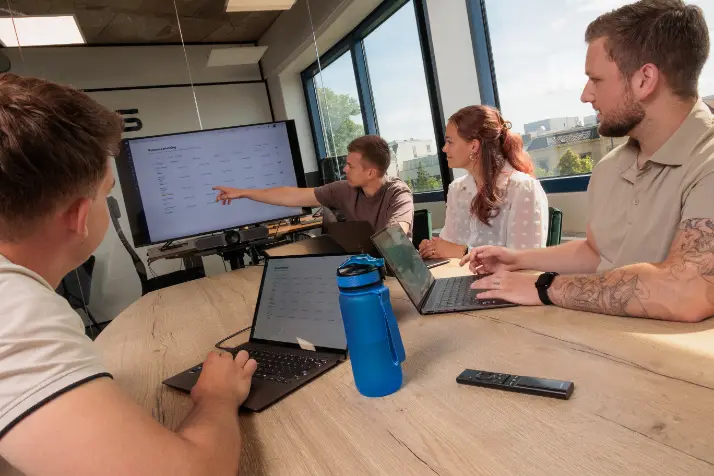
At VDS Automation we help companies in the manufacturing industry work smarter with data and technology. As AI & Machine Learning Engineer you build the part that looks ahead: models that predict what is going to happen, and AI applications that take work off people’s hands. You work in code, from raw data to a solution running in production.
You work on projects for a range of customers, from customer question to a working solution in production. One time you develop an AI application or a workflow in which AI makes a customer process smarter. Another time you build a model that predicts when a machine needs maintenance, or a forecast for production or demand.
An example: a manufacturer wants less unplanned downtime. The machine data is already there, because colleagues have connected the machine using our own IoT hardware. You dig into that data, make it usable and build a model that flags anomalies and predicts maintenance. Then you take the model into production and make sure the people on the floor see the result.
So you work on the whole chain: from raw data to a model running on the production floor.
Think of:
You do not work on hardware or embedded software. Connecting and configuring machines is done by your colleagues. Your work starts with the data: turning it into models and applications that work.
We build AI-first. AI writes the first version, you decide whether it is good enough. You read the code, test it and adjust it. AI is a tool, not a colleague you take at their word.
For you it goes a step further, because AI is also what you build for customers. So you know not only how to work with it, but also where it falls short and how to test for that.
New tools follow one another quickly. You have to enjoy that pace. See something new and think we should try this? Then you get the room to do so.
No two weeks are the same, but you will recognise this rhythm. You are at customers less often than the consultants, but often enough to know where your data comes from.
Week start with the whole team: who is where, what is stuck, where a few hours of help are needed. Then planning your own projects.
At a customer, when the project calls for it. Seeing how the data is created, what the real question is and what the people on the floor can do with a prediction.
Build day. Preparing data, training and validating a model, or working out an LLM pipeline. You test your work thoroughly before it goes to the customer.
Taking it into production and adjusting: does the model run stably, is the outcome still right, and do people actually use it?
Room to learn and experiment: trying out a new AI tool, a Udemy course or taking an internal application further. Rounding off with drinks.
Examples of the kind of problems you work on, for companies in the manufacturing and process industries.
Analysing sensor data from motors and pumps, flagging anomalies early and predicting when maintenance is needed. The challenge lies in the data: breakdowns are rare, so you have few examples to learn from.
Combining order history, seasons and customer behaviour into a forecast that planning runs on. The model does not only have to be right. The planner also has to understand why it predicts something.
Searching measurements from quality control for patterns that precede rejects. The signal goes to the floor. What they do with it is up to them.
An LLM pipeline that makes manuals, work instructions and breakdown history searchable for maintenance engineers. You test not only whether it works, but above all when it goes wrong.
You do not need to master everything in the stack yet. You do have a solid foundation in machine learning and software, you build independently and you pick up new technology quickly.
A higher professional or university degree (hbo/wo) in a technical field is a good fit. Demonstrable skill counts at least as much for us.
The tools you work with, depending on the customer question. Not a mandatory set.
Colleagues also work with Power BI and our own IoT hardware. You will come across it, but it is not the core of this role.
We are a growing company in Leeuwarden and combine data, automation, AI and hardware. Our centre of gravity is the manufacturing industry, so you work with data from factories where it really happens. The team is small and level-headed, the lines are short and good ideas quickly make it into practice.
You get plenty of freedom to explore new possibilities. At the same time you look beyond the technology. Technology is the means, not the goal. What you build gives the customer a prediction, a signal or an overview they use to decide for themselves. It is their factory, you deliver the insight.
And what you build does not sit in a test environment for months. You see it back in real production environments.
This is the whole team. Small enough that you know everyone, big enough that there is always someone who knows how something works.
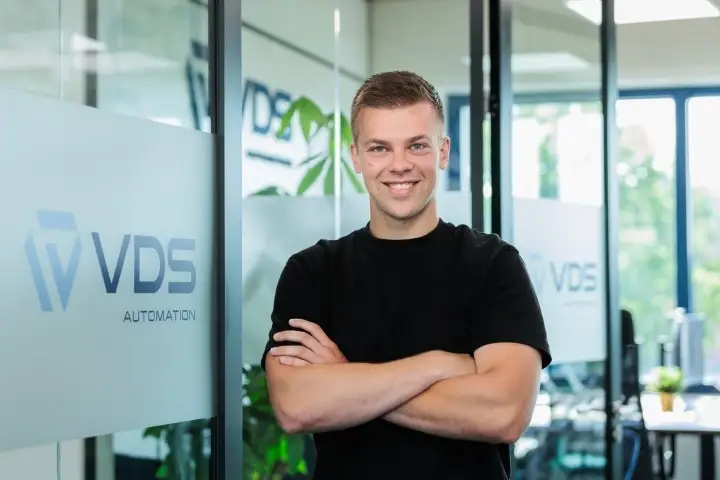
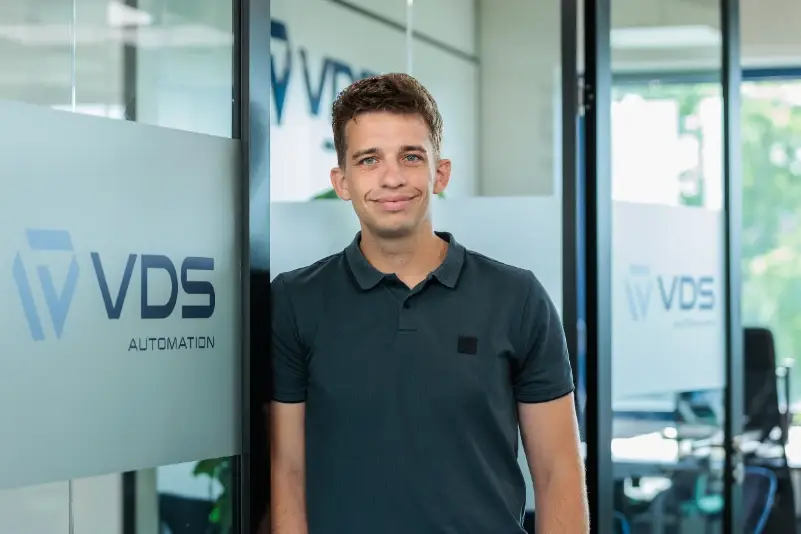
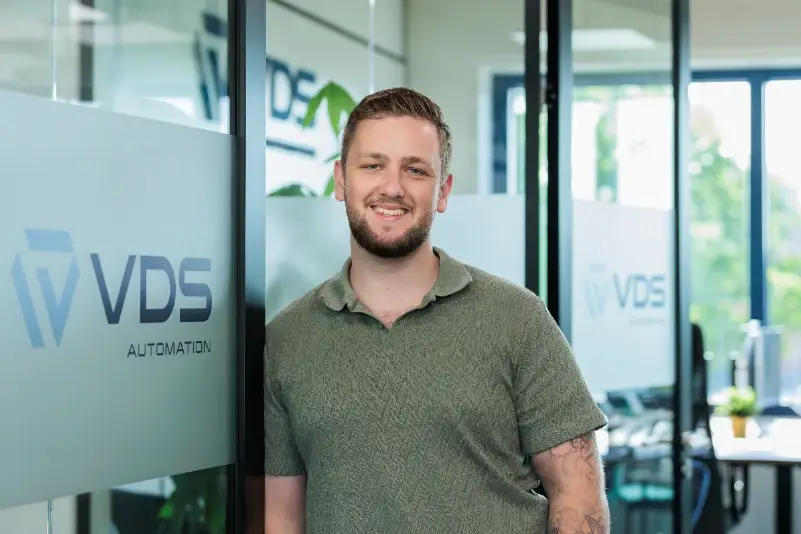

Yes. Your colleagues are strong in data, dashboards and apps. For machine learning you are the go-to person. That means plenty of responsibility of your own and room to shape the discipline within VDS. If you are looking for a large ML team to learn from, this role is less of a fit.
Less than the consultants. Usually at the start of a project, at interim demos and at delivery. The rest of the week you work at the office in Leeuwarden or from home. The customers are mostly in the north and east of the Netherlands.
That depends on the customer. Often a model runs in the customer’s data environment, such as Microsoft Fabric, and the outcome comes back in a dashboard or application. You help decide how it is monitored and maintained, so it keeps working when the data changes.
No. It helps if you have seen the inside of a factory, but it is not a requirement. What matters more is that you want to understand how the data you work with is created.
Are you someone who does not just find new technology interesting, but above all wants to discover what you can build with it? And do you want to build machine learning and AI that really runs in a factory? Then we would love to get to know you. Apply straight away using the form below.
Torn between this role and Consultant Data & Digitalisation? That role focuses on data platforms, dashboards and apps for the customer. This one focuses on machine learning models and LLM applications. Just apply, and we will work out together what fits.
For this job opening VDS Automation works exclusively with JPD Personeelsdiensten. They guide the procedure; you will hear from us within 24 hours on working days.
Questions? Feel free to send a WhatsApp message to 06-45661736.
Fields marked * are required. A CV and motivation are optional, but they help us get to know you better.
We have received your details. You will hear from us within 24 hours on working days.
Send your CV and a short motivation. We read everything and you will hear from us within 24 hours on working days. Not a perfect match? Speculative applications are welcome too.