
EMS and GACS from 2026: what changes, who it affects, and how to prepare
EMS and GACS from 2026: what changes, who it affects, and how to prepare
This is how you meet the standard and accelerate optimization
This is how you meet the standard and accelerate optimization
Dec 12, 2025
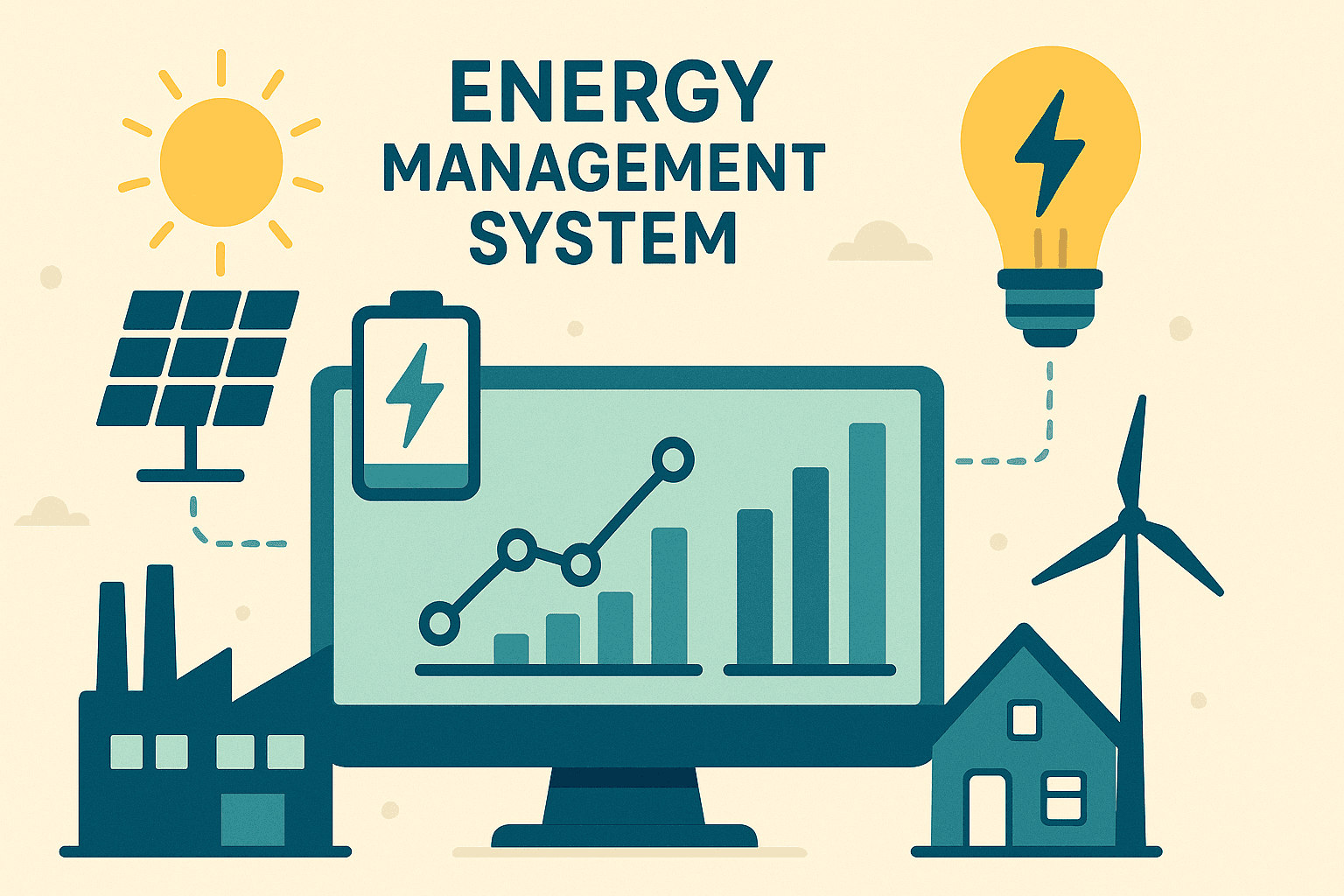
The energy transition is accelerating. From 2026, organizations will face stricter requirements for monitoring and optimizing energy consumption. In practice, you hear two terms increasingly often: EMS (Energy Management System) and GACS (Building Automation and Control System). Both are about using energy more intelligently, but they serve different purposes and together provide the most value.
At VDS, we often see it: there is a nice building management system or there are good dashboards, but they do not work as a cohesive whole. This leads to either a report without impact or technology without direction. In this blog, we explain what changes from 2026, who it affects, and how to practically prepare, so that you not only comply with regulations, but also demonstrably save energy.
The energy transition is accelerating. From 2026, organizations will face stricter requirements for monitoring and optimizing energy consumption. In practice, you hear two terms increasingly often: EMS (Energy Management System) and GACS (Building Automation and Control System). Both are about using energy more intelligently, but they serve different purposes and together provide the most value.
At VDS, we often see it: there is a nice building management system or there are good dashboards, but they do not work as a cohesive whole. This leads to either a report without impact or technology without direction. In this blog, we explain what changes from 2026, who it affects, and how to practically prepare, so that you not only comply with regulations, but also demonstrably save energy.
What is the difference between EMS and GACS?
GACS (Building/GBS) is the control brain of your building. It manages installations, heating, cooling, ventilation, based on sensors and schedules. The goal: comfort and efficiency in the moment.
EMS is your energy manager. It measures and analyzes consumption (electricity, gas and where applicable water/steam/compressed air), signals waste, compares locations, and reports (e.g. in line with ISO or audit obligations). The goal: continuous improvement over time.
In short: GACS executes, EMS provides insight and direction. Together, you turn data into concrete guidance: the EMS discovers the opportunity, the GACS implements the action, and the EMS proves the result.
GACS (Building/GBS) is the control brain of your building. It manages installations, heating, cooling, ventilation, based on sensors and schedules. The goal: comfort and efficiency in the moment.
EMS is your energy manager. It measures and analyzes consumption (electricity, gas and where applicable water/steam/compressed air), signals waste, compares locations, and reports (e.g. in line with ISO or audit obligations). The goal: continuous improvement over time.
In short: GACS executes, EMS provides insight and direction. Together, you turn data into concrete guidance: the EMS discovers the opportunity, the GACS implements the action, and the EMS proves the result.
What will change in 2026?
For utility buildings with large HVAC systems, automated control and monitoring is the standard (GACS).
For large energy consumers, continuous insight and demonstrable optimization is expected (EMS functionality): measuring, analyzing, alarming, and reporting.
Existing energy-saving obligations remain relevant: measures with a short payback period must demonstrably be addressed.
Important: the direction is clear, moving from one-time measurements to ongoing performance control. The precise national implementation will determine the details of threshold values and enforcement; substantively, it pays off to get your foundation in order now.
For utility buildings with large HVAC systems, automated control and monitoring is the standard (GACS).
For large energy consumers, continuous insight and demonstrable optimization is expected (EMS functionality): measuring, analyzing, alarming, and reporting.
Existing energy-saving obligations remain relevant: measures with a short payback period must demonstrably be addressed.
Important: the direction is clear, moving from one-time measurements to ongoing performance control. The precise national implementation will determine the details of threshold values and enforcement; substantively, it pays off to get your foundation in order now.
Who gets hit?
Buildings with significant climate installations (offices, education, healthcare, logistics, production): GACS for automatic control and optimization. Specifically: you need to have installations under control in terms of regulation, with schemas and setpoints that demonstrably fit occupancy and season.
Locations with high annual consumption: EMS to continuously monitor consumption, detect deviations (night load, peaks, unexpected runtimes), and secure improvements. Consider sites with high process consumption or extensive working hours, where "standby consumption" can quickly escalate if nothing or no one is watching.
For organizations with multiple locations: use the same KPI definitions and reporting standards everywhere (e.g., kWh/m² for offices or kWh per product unit for production). This way, you can compare performances fairly, see outliers immediately, and roll out proven improvements from location A to B and C in a controlled manner.
Buildings with significant climate installations (offices, education, healthcare, logistics, production): GACS for automatic control and optimization. Specifically: you need to have installations under control in terms of regulation, with schemas and setpoints that demonstrably fit occupancy and season.
Locations with high annual consumption: EMS to continuously monitor consumption, detect deviations (night load, peaks, unexpected runtimes), and secure improvements. Consider sites with high process consumption or extensive working hours, where "standby consumption" can quickly escalate if nothing or no one is watching.
For organizations with multiple locations: use the same KPI definitions and reporting standards everywhere (e.g., kWh/m² for offices or kWh per product unit for production). This way, you can compare performances fairly, see outliers immediately, and roll out proven improvements from location A to B and C in a controlled manner.
This is how you prepare practically (step-by-step plan)
Step 1 — Baseline Measurement and Scope
Map out the main meter and sub-meters. Identify major consumers (HVAC, compressed air, process lines) and record operating hours and seasonal influences. Also check the status: where is something running 24/7 while the occupancy does not justify it? Document your current targets (if any) and gaps in data (where are you missing measurement or resolution).
Step 2 — Data Plan
Ensure that you have continuous data at the points where you can intervene: main connection, distribution boxes, HVAC, critical processes. Where possible, link GBS/GACS data (temperatures, setpoints, valve positions, runtimes) to your consumption data. Specify the frequency you need (e.g., quarter-hour values for peak detection) and who will manage it (IT/OT, security, role access). Consider open protocols and APIs so that you are not locked into a single supplier.
Step 3 — Core KPIs and Targets
Start small with 2–3 KPIs that deliver the most value:
Night load/base load: % of daily consumption between 01:00–05:00.
Peak power: ratio to contract/technical limit, plus frequency of exceedance.
Specific consumption: kWh/m² or kWh per product unit, with normal ranges per season.
Document ranges/targets (e.g., night load < 8%, peak < 90% of contract power) and assign ownership for each KPI (who responds to an alert, within what timeframe, and how is the action documented?).
Step 4 — Action Loop
Set up alerts for relevant deviations (e.g., idle running on AHUs, unexplained compressor runtimes, peaks around startup). Translate EMS insights into setpoint or schedule adjustments in GACS or into clear work orders for engineering/maintenance (who, what, when). Measure the effect and report monthly with a brief PDCA: what worked, what didn’t, what will we tighten up next month?
Step 5 — Scale Up
If the foundation is yielding returns, expand to more meters/departments/locations. Automate where logical: rules in GACS that respond predictably to patterns detected by the EMS (e.g., further reduce ventilation under a combination signal of presence + low CO₂, or load-shifting based on predictable peaks). Periodically review targets based on actual performance and changing occupancy patterns.
Step 1 — Baseline Measurement and Scope
Map out the main meter and sub-meters. Identify major consumers (HVAC, compressed air, process lines) and record operating hours and seasonal influences. Also check the status: where is something running 24/7 while the occupancy does not justify it? Document your current targets (if any) and gaps in data (where are you missing measurement or resolution).
Step 2 — Data Plan
Ensure that you have continuous data at the points where you can intervene: main connection, distribution boxes, HVAC, critical processes. Where possible, link GBS/GACS data (temperatures, setpoints, valve positions, runtimes) to your consumption data. Specify the frequency you need (e.g., quarter-hour values for peak detection) and who will manage it (IT/OT, security, role access). Consider open protocols and APIs so that you are not locked into a single supplier.
Step 3 — Core KPIs and Targets
Start small with 2–3 KPIs that deliver the most value:
Night load/base load: % of daily consumption between 01:00–05:00.
Peak power: ratio to contract/technical limit, plus frequency of exceedance.
Specific consumption: kWh/m² or kWh per product unit, with normal ranges per season.
Document ranges/targets (e.g., night load < 8%, peak < 90% of contract power) and assign ownership for each KPI (who responds to an alert, within what timeframe, and how is the action documented?).
Step 4 — Action Loop
Set up alerts for relevant deviations (e.g., idle running on AHUs, unexplained compressor runtimes, peaks around startup). Translate EMS insights into setpoint or schedule adjustments in GACS or into clear work orders for engineering/maintenance (who, what, when). Measure the effect and report monthly with a brief PDCA: what worked, what didn’t, what will we tighten up next month?
Step 5 — Scale Up
If the foundation is yielding returns, expand to more meters/departments/locations. Automate where logical: rules in GACS that respond predictably to patterns detected by the EMS (e.g., further reduce ventilation under a combination signal of presence + low CO₂, or load-shifting based on predictable peaks). Periodically review targets based on actual performance and changing occupancy patterns.
Discover in one conversation how you comply with the regulations and save costs.
More blogs
More blogs
Read our other blog posts
Read our other blog posts
Blog
Analytics
From KPIs to concrete steering
Nov 7, 2025
Blog
Analytics
Self-service BI: smart outsourcing to your own key users (or not)
Oct 15, 2025
Blog
Analytics
Energy monitoring: what is it, what can you do with it, and how do you implement it?
Nov 26, 2025

Blog
IoT
OEE: what is it, what can you do with it, and how do you implement it?
Sep 30, 2025

Curious about how a training
Contact us and discover what VDS can mean for your organization in the field of Artificial Intelligence.

Curious about how a training
Contact us and discover what VDS can mean for your organization in the field of Artificial Intelligence.